
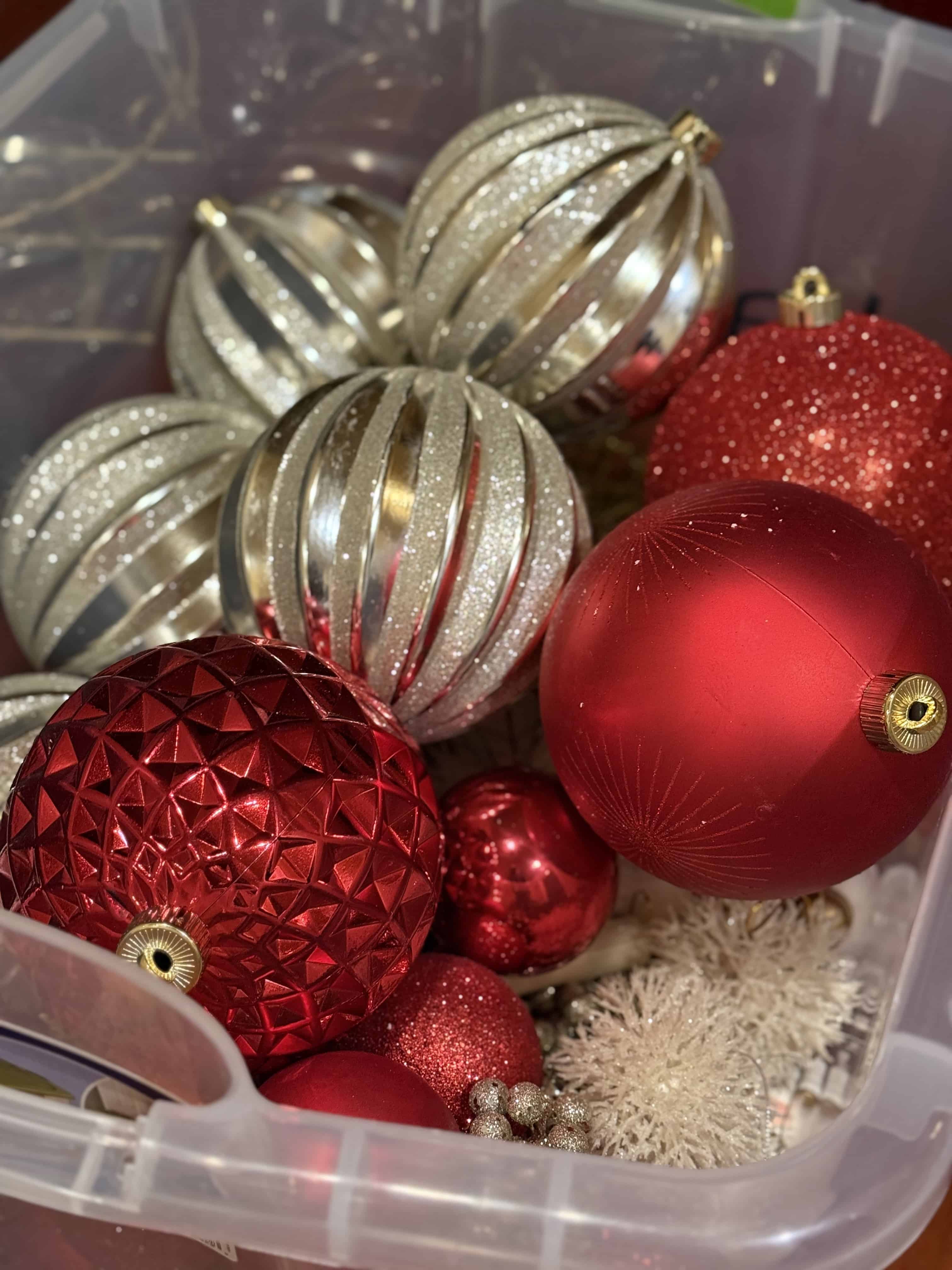
Every year, when it’s time to take down the Christmas decorations, I feel it—the tiredness after the holidays, the mental overload, and the urge to just shove everything back into bins and promise myself I’ll “do it better next year.” That moment is exactly why taking the time to declutter and organize Christmas decorations intentionally matters so much.
For a long time, that’s exactly what I did. However, I learned the hard way that the reason decorating felt harder every single year wasn’t because I had too much décor — it was because I wasn’t taking the time to declutter and organize Christmas decorations while taking them down. I started doing that, everything changed.
Why Decluttering Christmas Decorations While Taking Them Down Matters
In the past, I would pack decorations away quickly just to get my house back to normal. Unfortunately, that meant I was also packing away:
- Decorations I didn’t even use
- Broken ornaments and tangled lights
- Items that no longer fit our family or home
As a result, decorating the next year felt overwhelming before I even started. That’s when I realized something important: Clutter doesn’t come from decorating — it comes from storing decisions we avoid making.
Because of this, many professional organizers encourage decluttering seasonal items regularly. Organizations like the National Association of Productivity & Organizing Professionals even emphasize keeping only what supports your current season of life.
Step 1: Create a Simple Decluttering Zone

Before storing anything, I always start by creating a simple decluttering zone. It’s nothing fancy—usually just a cleared section of the floor or the dining table—but it completely changes how the process feels. As each decoration comes down, it goes there first. Not straight into a bin. Not back into the closet. This one step slows the process just enough to make space for real decisions instead of rushed ones.
That small pause is what keeps clutter from being packed away on autopilot. When everything passes through one central spot, it’s easier to see what we actually used, what we enjoyed, and what’s ready to be let go. It turns takedown into a reset—so what gets stored is intentional, not just what happened to be closest to a box.
Step 2: How I Declutter Christmas Decorations Without Overthinking
As I take decorations down, I move through these questions one at a time:
- Did I actually use this this year?
- Would I choose this again today?
- Is it broken, tangled, or missing pieces?
- Does this still fit how our holidays look now?
When an item doesn’t clearly earn a “yes” across the board—or feels more draining than enjoyable—I let it go. That clarity keeps me from storing things out of habit instead of intention.
At first, this felt uncomfortable. I had Christmas decorations my mom gave me when I was younger, and letting some of them go came with a lot of guilt. But over time, I realized I wasn’t losing memories—I was gaining clarity.

As I reorganized our Christmas decorations, I also started thinking more intentionally about how they were stored. Clear storage bins, like these clear weathertight trunks, can make a big difference because being able to see what’s inside without opening every container saves time and helps prevent overbuying the following year. No matter what bins you use, grouping items by where they’re used—tree, kitchen, and outdoor décor—keeps the system simple and contained. That shift alone can make the entire process feel calmer instead of chaotic.
Step 3: Sorting Decorations Into Simple Categories
Once I’ve decluttered, I group what’s left into broad categories:
- Tree decorations
- Mantel or shelf décor
- Outdoor decorations
- Holiday linens
- Sentimental items
This is the point where I intentionally slow down and keep things simple. I don’t try to organize by color, theme, or specific room layouts, because I know those systems don’t hold up long-term for me. Broad categories are easier to maintain, especially when I’m tired or short on time. They give every item a clear home without requiring me to remember complicated rules.
Grouping decorations this way also makes the next holiday season feel lighter. When it’s time to decorate again, I’m not opening five bins just to find one item or trying to remember where something was stored last year. Everything I need is grouped together in a way that makes sense, which reduces decision fatigue before I even start. Over time, I’ve learned that the systems that last aren’t the most detailed ones—they’re the ones that are easy to follow on your busiest days. This step keeps organizing realistic, repeatable, and calm.
Step 4: How I Organize Christmas Decorations for Next Year
This is where I made my biggest shift. Instead of organizing for Pinterest, I organize for future me. I use clear bins whenever possible so I can see what I have without opening everything. I label each bin by where items are used, not by theme.
For example:
- Tree Decor
- Outdoor Lights
- Christmas Kitchen
- Holiday Linens
Because of this, decorating next year feels calmer and faster. Labeling the bins was the step that made the system hold. I kept it simple—just “Christmas: Tree,” “Christmas: Kitchen,” and “Christmas: Outdoor.” Whether you use basic adhesive labels or a label maker, the goal is clarity. Those labels are what keep decorations from drifting into other storage areas throughout the year and save you from rethinking everything next December.
Step 5: How to Store Christmas Decorations Without Overwhelm
As I store everything away, I pause and ask myself one final question:
What would make this easier next year?
That question shifts the focus from getting everything put away quickly to creating a system that actually supports future me. It reminds me that I’m not just closing out the season—I’m setting the tone for how next Christmas will feel before it even begins.
Usually, that means putting the most frequently used items right on top, so decorating doesn’t start with digging or frustration. It means letting go of lights that caused stress this year instead of convincing myself I’ll fix them later. It means avoiding overstuffed bins that are hard to lift, hard to close, and even harder to deal with when the time comes to open them again. Using containers that allow you to see what’s inside—or dedicated storage for fragile ornaments, like this ornament storage with individual compartments—can make this part noticeably easier, especially when you’re trying to protect pieces you truly care about without adding complexity.

It also means keeping sentimental décor in one intentional container, so it feels special and contained rather than scattered and overwhelming. When those items are stored thoughtfully, they’re easier to enjoy and less likely to turn into a source of stress or guilt.
Approaching storage with this mindset has completely changed how the holidays feel in our home. When decorations are easy to access and simple to put away, decorating becomes something I look forward to instead of something I brace myself for. That one question—asked at the right moment—has saved me more stress than any organizing trick ever could.
Step 6: A Final 10-Minute Reset
Before I’m done, I always set a 10-minute timer. This is my signal that the reset has an endpoint and doesn’t need to turn into an all-day project. During those ten minutes, I toss empty packaging, set aside donations, and recycle anything broken or unusable. I don’t overthink it, and I don’t try to squeeze in extra tasks—this is simply about clearing what no longer belongs.
When the timer ends, I stop. Even if everything isn’t perfect. That part took practice, but it’s been one of the most important shifts for me. Waiting for perfect used to keep me stuck or push me into overdoing it. Giving myself permission to stop has made resets feel sustainable instead of exhausting. Progress, even in small pockets of time, has proven to matter far more than perfection ever did.
Why Decluttering Christmas Decorations Makes the Rest of the Year Easier
What surprised me most is how much this one habit affected my home beyond the holidays. When I declutter and organize Christmas decorations intentionally:
- Storage stays manageable
- Closets feel lighter
- Cleaning is faster
- Decorating becomes enjoyable again
If you’re working toward systems that last beyond the holidays, you might also like my organizing guide for busy moms, where I walk through decluttering by space and maintaining it year-round.

One small thing that helped this reset feel complete was keeping a large donation bag nearby while I worked. Anything we didn’t use or had outgrown went straight in, which made it easier to let go without second guessing. Having a designated donation spot kept the momentum going and prevented unnecessary clutter from going back into storage.
Decluttering your Christmas decorations is one of those small decisions that quietly makes the rest of the year easier. When decorations are sorted, donated, discarded, and clearly labeled before they’re stored, they stop becoming hidden clutter you have to manage later.
This checklist helps turn holiday takedown into a true reset—so your storage stays functional, your home stays easier to maintain, and decorating feels enjoyable instead of overwhelming.

Final Thoughts
Decluttering and organizing Christmas decorations isn’t about having less. It’s about having less stress, fewer decisions, and a home that feels easier to manage — especially during busy seasons. If you’re standing in the middle of your living room right now, staring at decorations and feeling overwhelmed, know this: you don’t have to do it perfectly. You just have to start.
Ready for a home that feels easier to manage?
Let’s make it happen—together. Join my email list and become part of the Neat Home Life Circle to receive our newsletter, free printables, and thoughtful resources designed to help you create a home that truly works for you.
*I’m not affiliated with the products mentioned in this post. I share them simply because they’re tools I’ve found helpful in creating simple, sustainable systems at home.

